In the world of high-end event planning, lighting is often the most underestimated element of design. While many view it purely through a lens of utility—ensuring guests can see where they’re going and what they’re doing—when approached with purpose, lighting becomes an active design tool that dictates the mood, defines the energy of the evening, and subtly guides your guests' eyes exactly where you want them.
The core of successful lighting design is absolute intentionality; you are highlighting specific details on purpose and allowing others to softly fade into the background. Natural light can add a beautiful context to a celebration; however, you can't pre-set a sunset or adjust a cloudy sky. True lighting design requires taking control of the environment.
Here are 3 key strategies on how to use intentional lighting to define a space and shape the guest experience:
1. Soften the Space with Ambient Glow
The quickest way to take a space from cold to inviting is to create control over the perimeter and overhead lighting. Standard venue downlighting can create harsh shadows and lacks dimension, whereas strategic ambient lighting introduces warmth, depth, and comfort.
Prioritize Color Temperature: Opt for a warm amber or soft candlelight hue over a crisp white or cool blue. A warm palette instantly softens the hard angles of a grand ballroom or an industrial venue, creating immediate intimacy.
Embrace Dimming Control: Ensure the lighting plan includes full dimming capabilities. The brightness required for a lively cocktail hour is entirely different from the mood required for a seated dinner.
Soften the Architecture: Perimeter uplighting draws the eye outward, making a room feel spacious yet incredibly inviting.

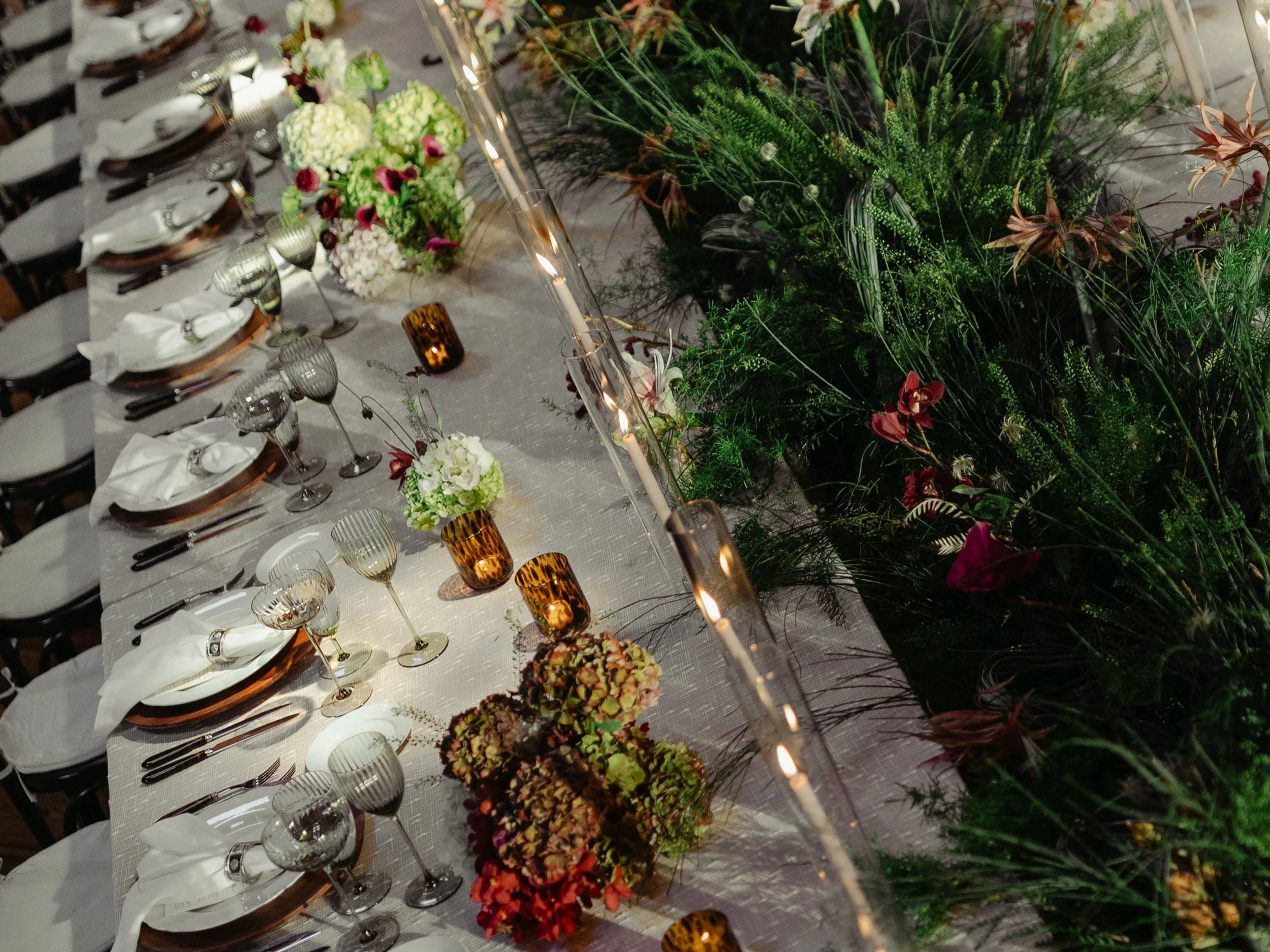
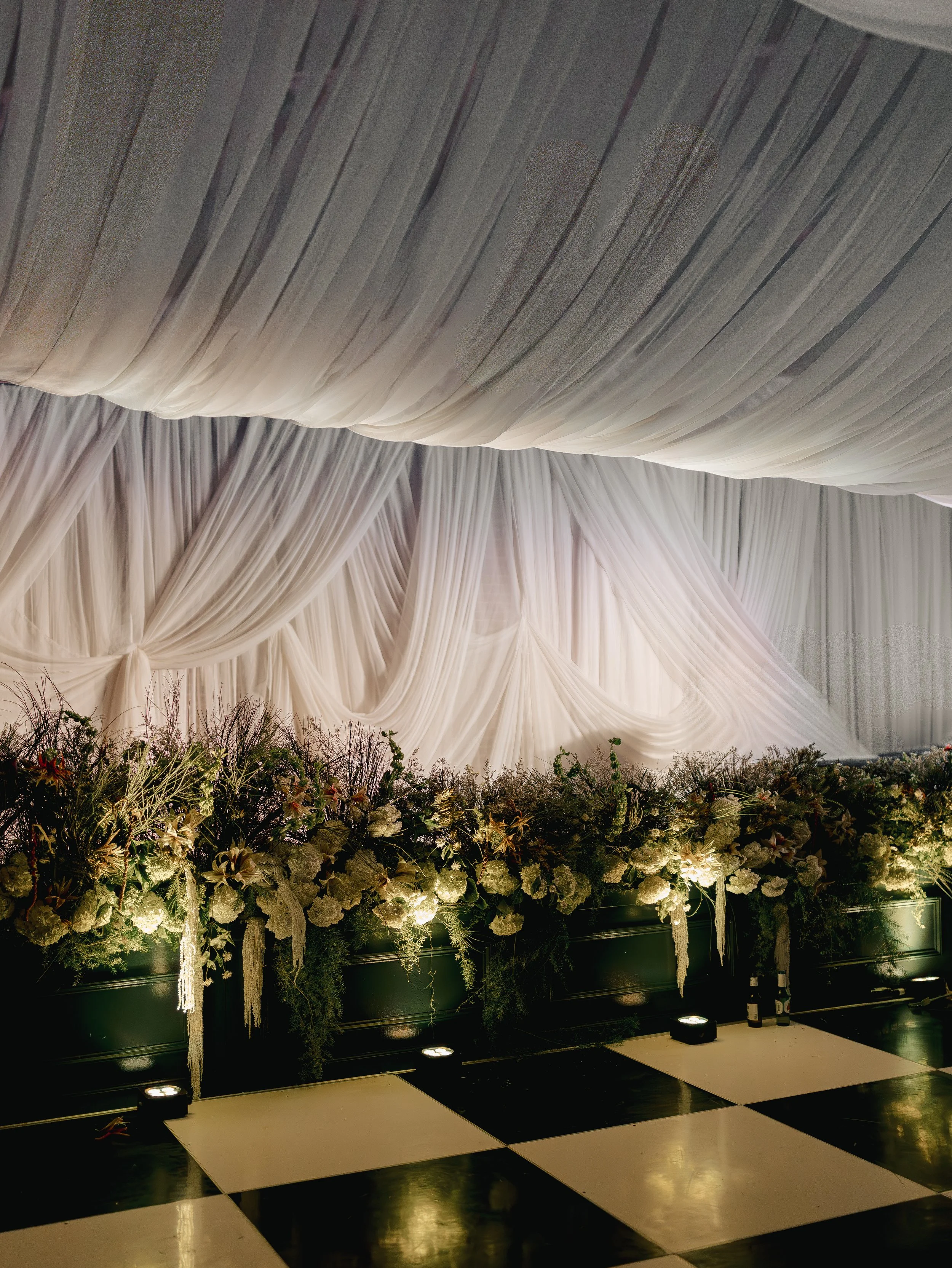
Real-World Inspiration: For Anna & Cam’s ballroom dinner, amber uplights were placed around the perimeter of the room, working in tandem with the venue's overhead lighting. The result was a gentle, controlled glow that made a historic, grand ballroom feel as cozy and intimate as a private, candlelit dinner party.
2. Sculpt the Space using Highlights and Shadows
High-level hosting relies on effortlessly directing guests through an evening, and light is the best visual tour guide. By intentionally spotlighting beautiful details and allowing less important areas to recede, you create a clear visual hierarchy across the venue.
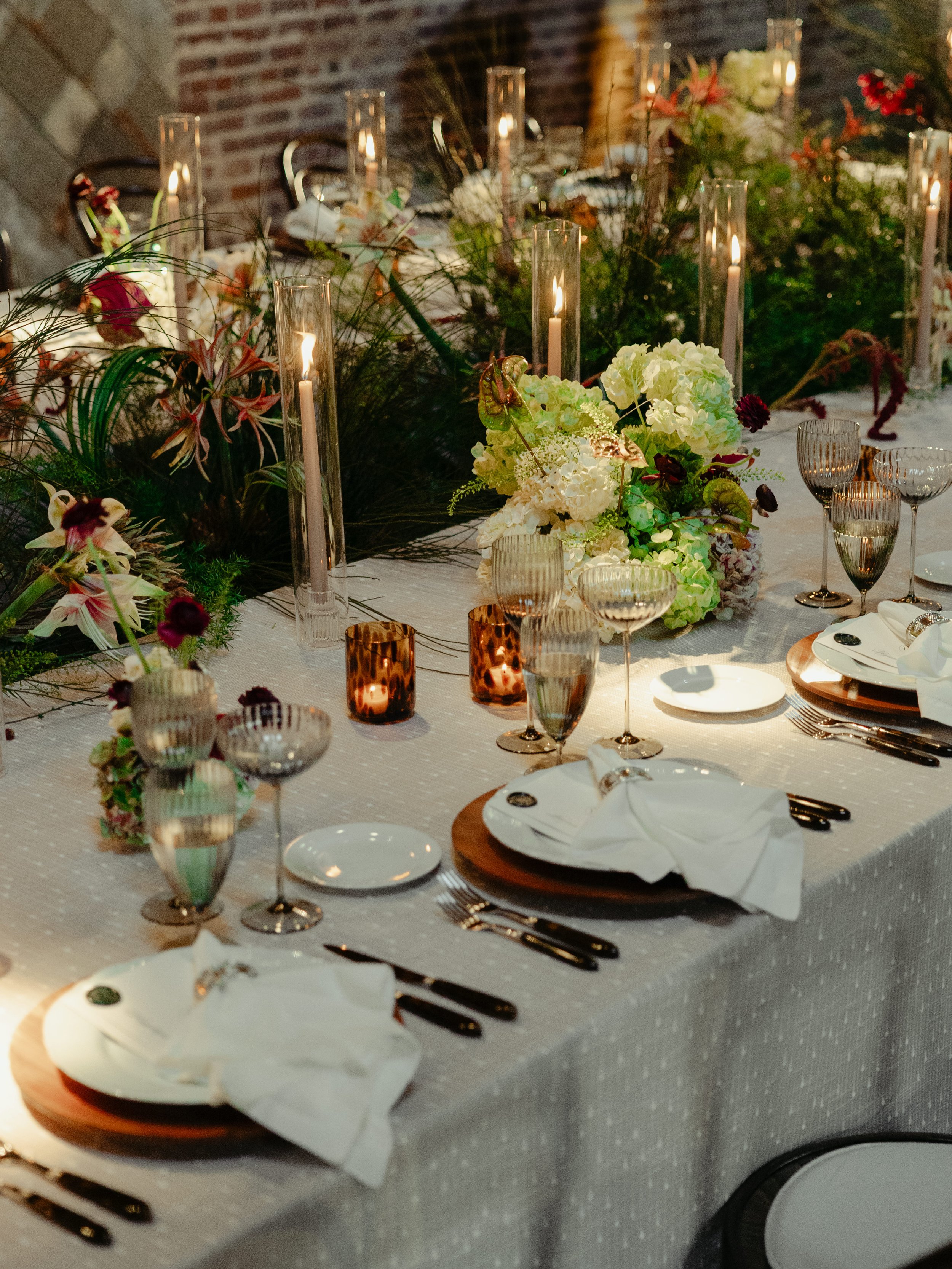
Pin-Spot the Details: Use tight, focused beams of light to illuminate specific design features. This ensures that centerpieces, custom food stations, or detailed place settings don't get lost when the lights are lowered for dinner. Pin-spots are the best way to highlight the elements you worked on tirelessly!
Establish Visual Anchors: Statement fixtures like chandeliers or low-hanging pendant lights naturally draw guests toward high-traffic areas, such as the main bar or a custom lounge.
Enhance the Textures: Directing light along custom fabric drapery or textured accent walls adds immediate depth and visual interest to the background.
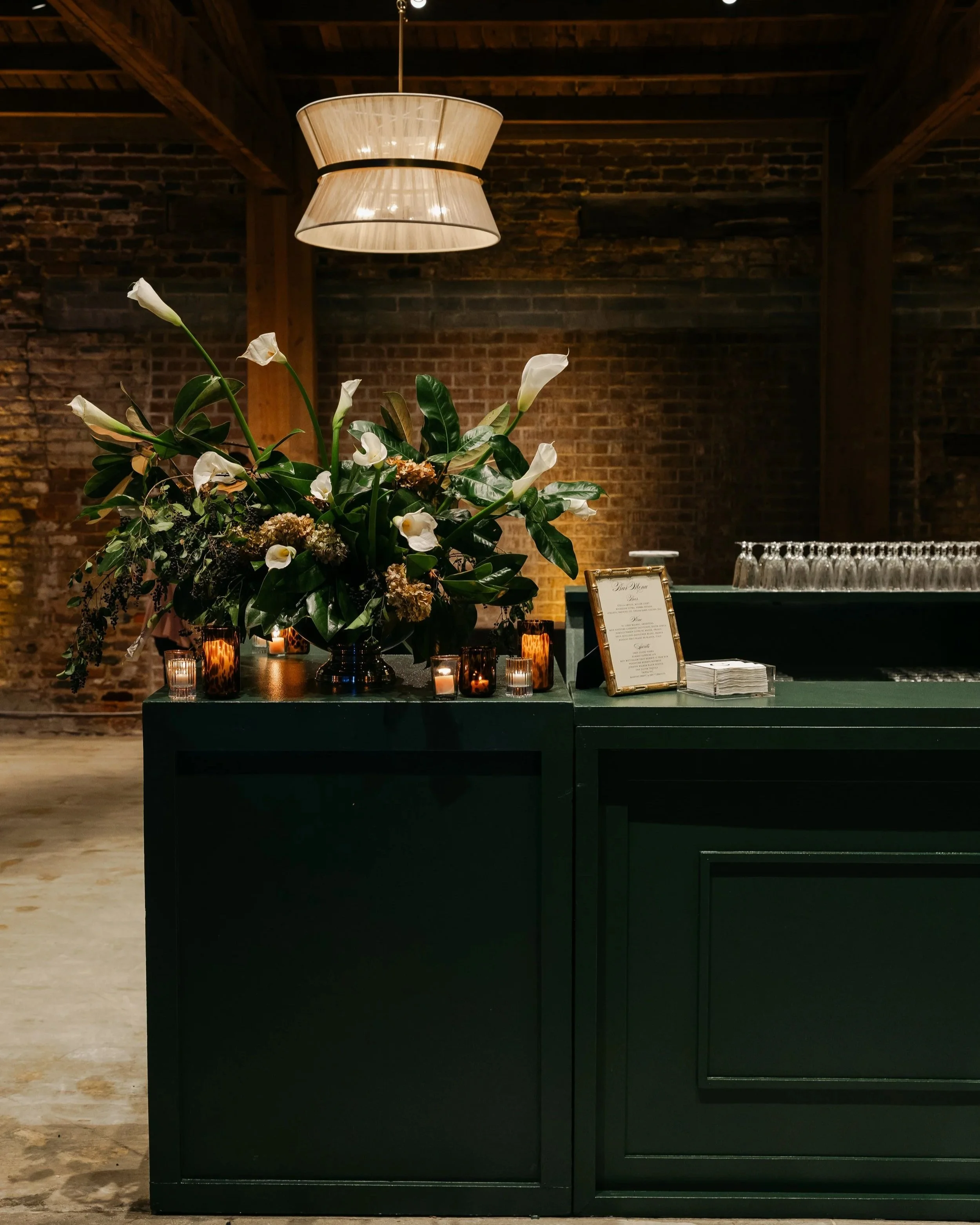
Real-World Inspiration: At Megan & Den’s reception, precise pin-spotting was essential to showcasing the details of the day. Focused beams highlighted the floral arrangements on the bars, the food stations, and the cascading blooms trailing from a rowboat suspended above the bourbon bar. Paired with elegant chandeliers over the main bar and uplighting that made the custom fabric drapery pop, the lighting ensured every beautiful element stood out.
3. Shift the Space for the Dance Floor
As an event transitions from a formal dinner into a party, the lighting should shift right along with the music. The dance floor is where the energy lives, and the design overhead needs to signal to guests that it is officially time to let loose.
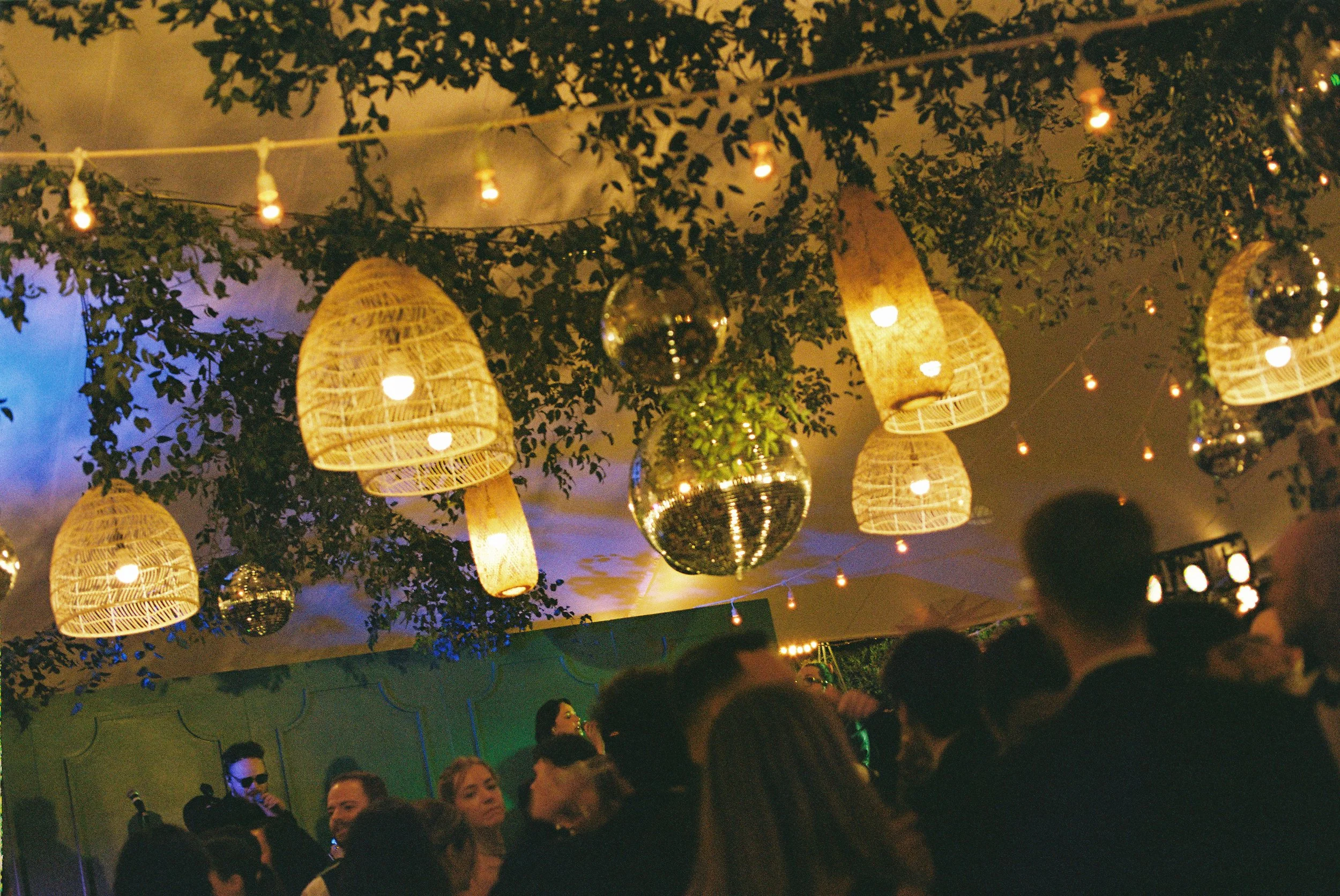
Layer the Overhead Canopy: Instead of leaving a vast open ceiling above the dance floor, create a sense of containment by layering different textures. Combining bistro lights with unique fixtures—think woven rattan lanterns or lush greenery installations (or both!)—creates a festive canopy that naturally pulls people together.
Incorporate a Classical Feature: A classic for a reason, adding a disco ball to your dance floor remains an unmatched tool for shifting energy. When hit with a pinpoint light, it scatters light across the room, instantly transitioning the mood from traditional to celebratory.
Utilize Active Color Transitions: Shy away from a “set it and forget it” approach and instead work with a lighting technician who can manage changes to the color and intensity of the lights as the night progresses. Progressing from a warm dinner glow to saturated, shifting tones mimics a high-end lounge experience and keeps the dance floor packed.

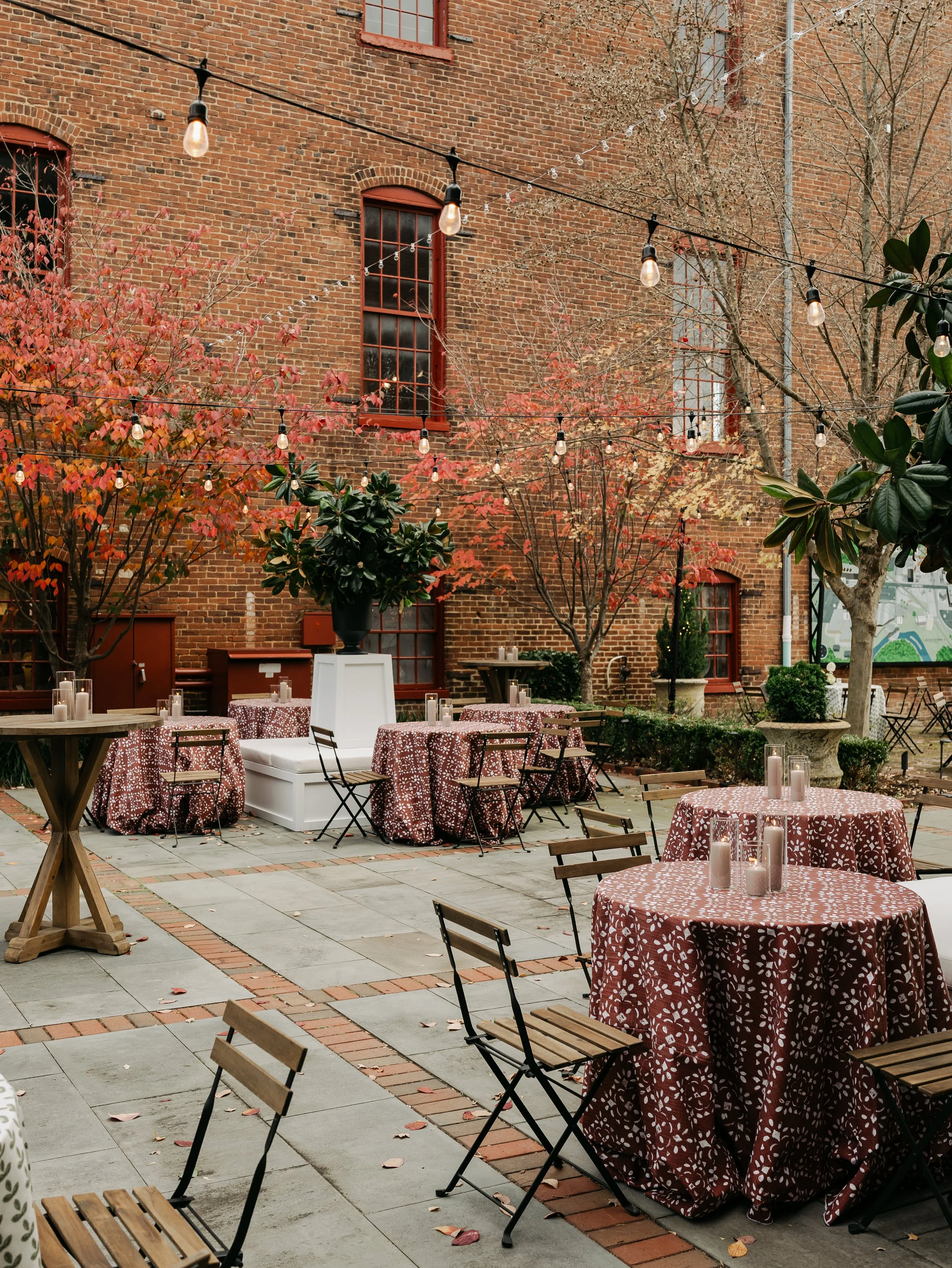
Real-World Inspiration: To transition Anna & Cam’s formal dinner to full party mode, a mix of bistro lights, rattan lanterns, and disco balls wrapped in lush greenery were suspended directly over the dance floor. As the music picked up, an onsite technician transitioned the perimeter uplighting to vibrant, changing colors, instantly transforming the energy of the entire tent. A similar approach was used for Megan & Den’s welcome party, where overhead bistro lighting established a relaxed, Tuscan-inspired energy from the moment guests left the formal, intimate rehearsal dinner.
The Bottom Line
Successful lighting design is never an afterthought or a background element; it is an active, strategic choice. When you move beyond simple utility to intentionally control the environment through atmospheric warmth, visual focus, and shifting energy, your venue transforms into a completely custom experience.
Are you dreaming of an intentional, design-forward celebration? Whether you're looking for a partial planning partner to help cross the finish line or a full-service planner to help you through every detail of the day, connect with us to start your planning journey.
Read More on the Blog